Delve into some of the top museum architecture tours around the world
March 30, 2026
Some museum buildings are works of art in themselves and can motivate visits just as much as the collections they contain. Inspired by the recent expansions of New York’s New Museum and Studio Museum in Harlem, delve into some of the top museum architecture tours on Bloomberg Connects.
Whether sensitively converted from historical landmarks or conjured into being by renowned architects, the best museum architecture helps tell the institution’s story and shape the visitors’ experience – how they move, see, and feel within a space. From historic palaces and neoclassical office blocks to grain silos and former armories, architect-designed museums around the world demonstrate how buildings form part of the artistic experience.
Crystal Bridges Museum of American Art
Bentonville, AR, USA
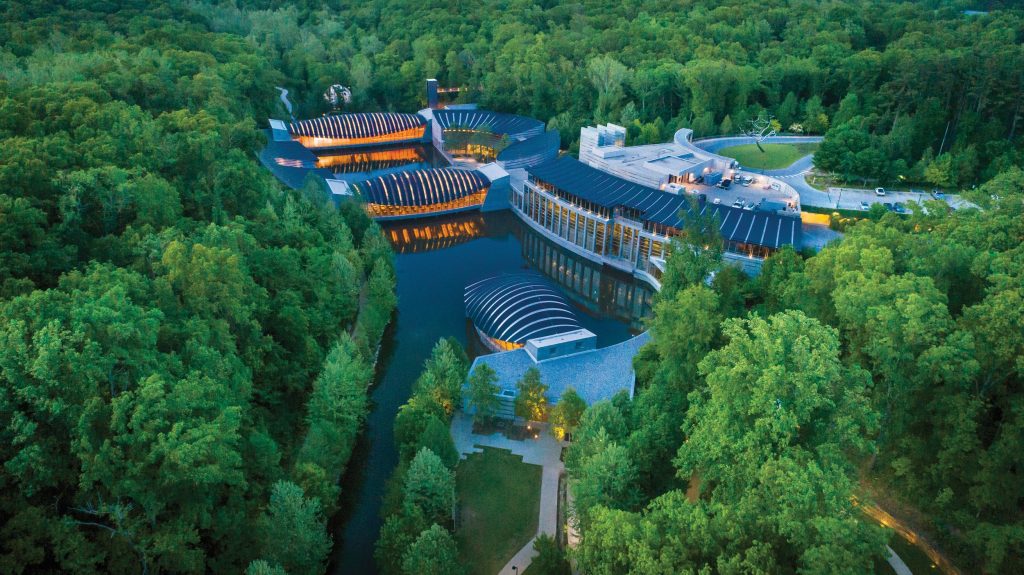
Nestled at the base of a ravine in 134 acres of Ozark woods, the Crystal Bridges Museum of American Art is celebrated for its integration with the natural landscape. Designed by Moshe Safdie (b. 1938), its glass pavilions are connected by a series of bridges that span the waterway, creating a museum experience where architecture and environment merge seamlessly. To mark the nation’s 250th anniversary, the institution is opening its expanded and reinstalled galleries – which double the building’s size – in summer 2026.
Architectural guide highlights include:
- The Art of Architecture audio tour that highlights key features of the museum building, including its curved walls, interplay between compression and expansion, and illusory “floating” roofs
- An outdoor tour of the pond system that manages water flow, the North Forest and Tulip Tree woodland shelters, and the organic curves of the limestone Overlook
- The Bachman-Wilson House (1954) is one of only a handful of two-story Usonian houses that Frank Lloyd Wright (1867-1959) designed. Threatened by flooding at its original New Jersey site, the house was disassembled, moved cross-country, and reconstructed on the Crystal Bridges grounds.
Yale Center for British Art
New Haven, CT, USA
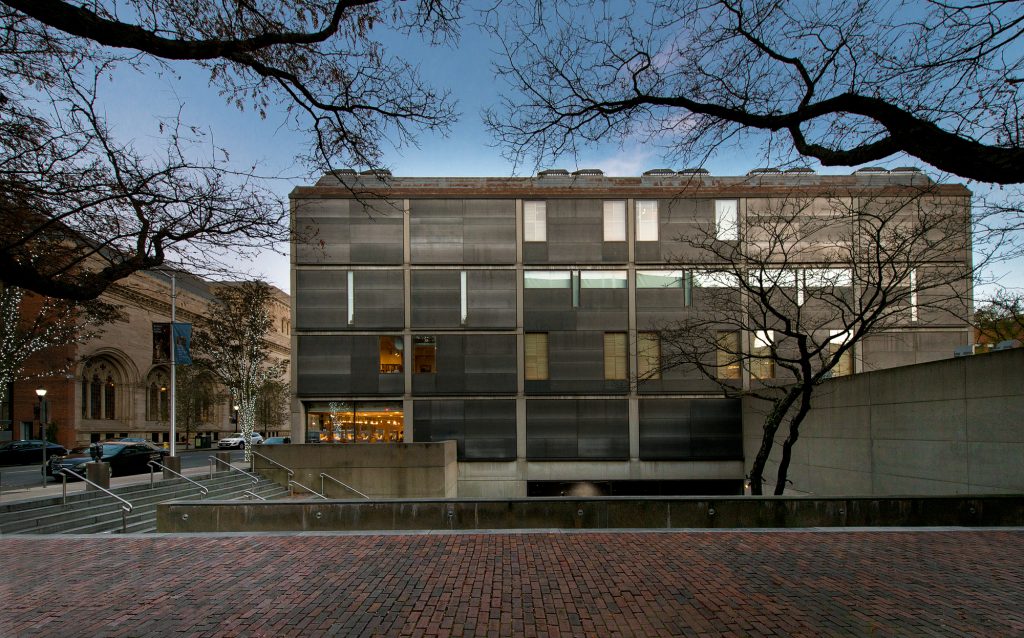
The Yale Center for British Art is a masterwork of modernist museum architecture and the last building that Louis I. Kahn (1901-1974) ever designed. Located across the street from his first major commission, the extension of the Yale University Art Gallery, the two buildings bookend the architect’s illustrious career. The Yale Center’s restrained concrete exterior and luminous use of natural light combine to create one of the most refined gallery environments in the United States. This underwent a complex conservation project in 2016, to refurbish and enhance the appearance and accessibility of its public spaces.
Architectural guide highlights include:
- The building’s exterior of matte steel and reflective glass, which Kahn described as “like a moth” on a gray day and “like a butterfly” on a sunny one
- The use of natural light and materials in their four-story Entrance Court, that creates a dramatic backdrop for the sculptures displayed
- Clever use of cast concrete to form the cylindrical stair tower that guides visitors up through the gallery floors and integrates with the second-floor Library Court
The Courtauld
London, UK
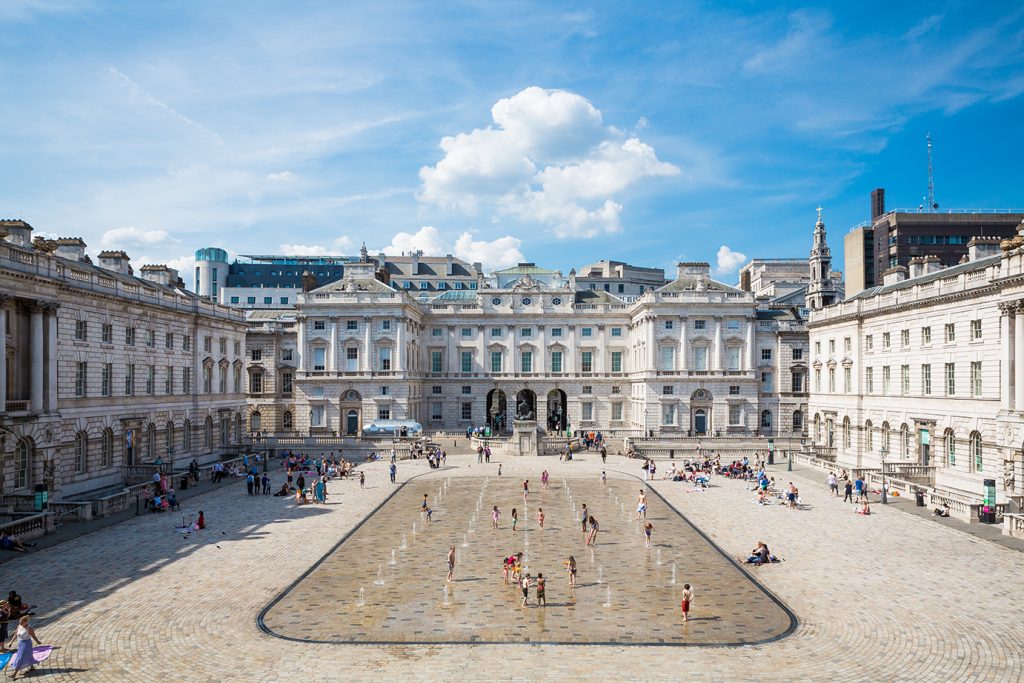
Located within Somerset House on the banks of the River Thames, The Courtauld combines neoclassical architecture with contemporary gallery renovations. Designed by Sir William Chambers (1723-1796) in the late 18th century as administrative offices, the building was later occupied by the Royal Academy of Arts (1780-1837) and, more recently, refurbished to provide state-of-the-art viewing conditions for The Courtauld’s renowned art collection.
Architectural guide highlights include:
- Details on the spiral staircase that Chambers envisioned as a symbolic “journey to enlightenment”, ceiling decorations depicting Nature, History, Allegory, and Fable, and the classical columns and skylight uncovered during renovations
- An audio history of Somerset House, including the early history of the site, the symbolism of sculptural details on each wing, and the establishment of the Royal Academy
- Behind-the-scenes insights into the 2021 refurbishment and its impact on collection displays through the Courtauld Cast podcast
Eltham Palace and Gardens
London, UK
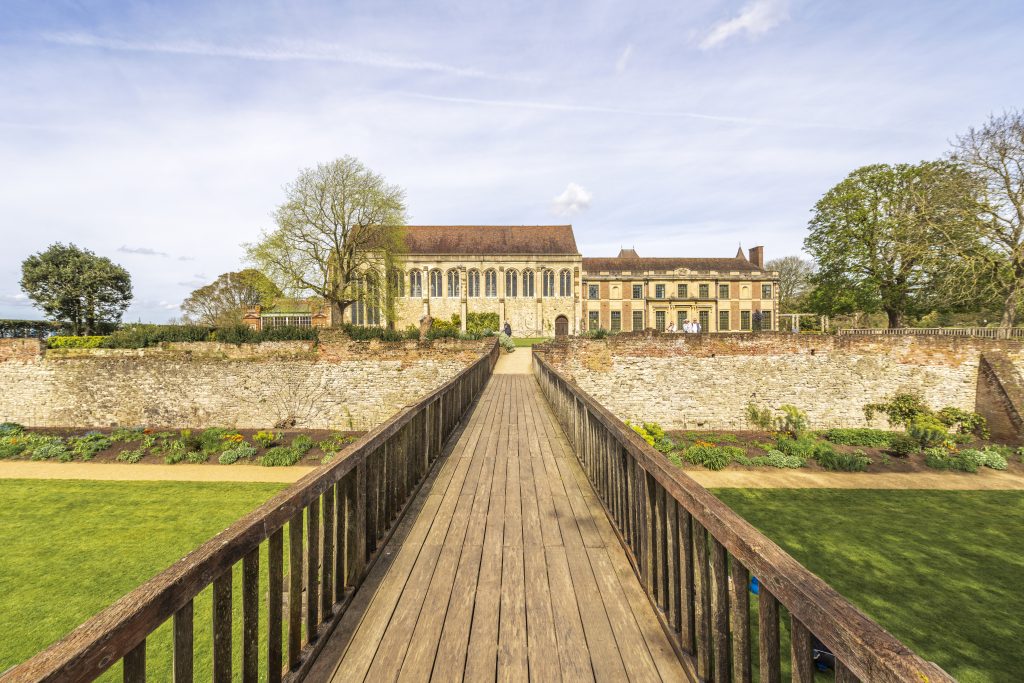
Having served as a royal residence for 300 years, in 1933 Eltham Palace was leased to eccentric millionaires Virginia and Stephen Courtauld (younger brother of the Courtauld Institute of Art’s founder). With the help of architects John Seely (1899-1963) and Paul Paget (1901-1985), they transformed the Tudor Hall into an Art Deco masterpiece, preserving some of its medieval features while adding extravagant flourishes elsewhere.
Architectural guide highlights include:
- Information on the restored medieval Great Hall with its Minstrels’ Gallery, which contrasts with the modernist glass-domed entrance hall and its Swedish interior design
- Unexpected features, such as Virginia’s lavish gold bathroom, the cage for her pet lemur Mah Jongg, and the controversial site of the squash court
- A deep dive into Eltham’s early history as a royal palace, decline in popularity under Queen Elizabeth I, and use as an air raid shelter in World War II
LUMA Arles
Arles, France
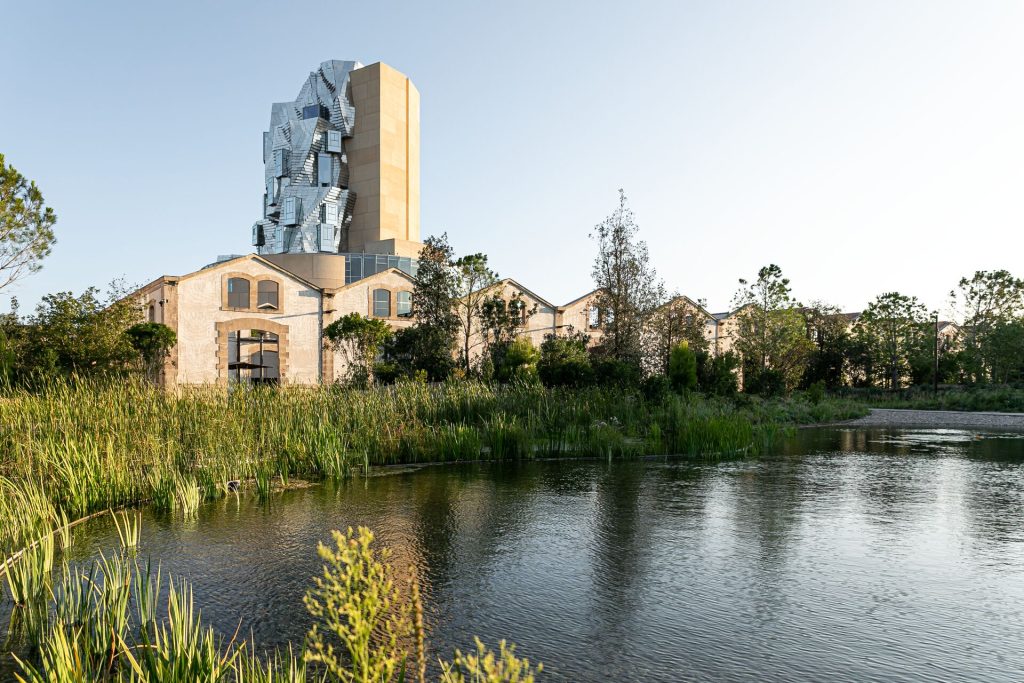
Designed by Frank Gehry (1929-2025), the twisting stainless steel LUMA Tower forms the centrepiece of LUMA Arles’ 11-hectare interdisciplinary creative campus, founded by Maja Hoffmann. It’s the site of a former railway complex that has been transformed into a multi-use art space, with temporary exhibitions, permanent installations, and a landscaped public park by Bas Smets.
Architectural guide highlights include:
- The Tower, with its glimmering metallic surface that references Vincent van Gogh, a crystallized salt wall developed by Atelier LUMA, and a 9th-floor terrace that offers breathtaking views over Arles
- Audio tours of permanent art installations in The Tower and the landscaped park, including works by Etel Adnan, Olafur Eliasson, and Koo Jeong A
- The storied history of the 19th-century Parc des Ateliers, which once housed workshops for steam locomotives and has recently been renovated by Annabelle Selldorf to host exhibitions and events
Deutsches Historisches Museum
Berlin, Germany
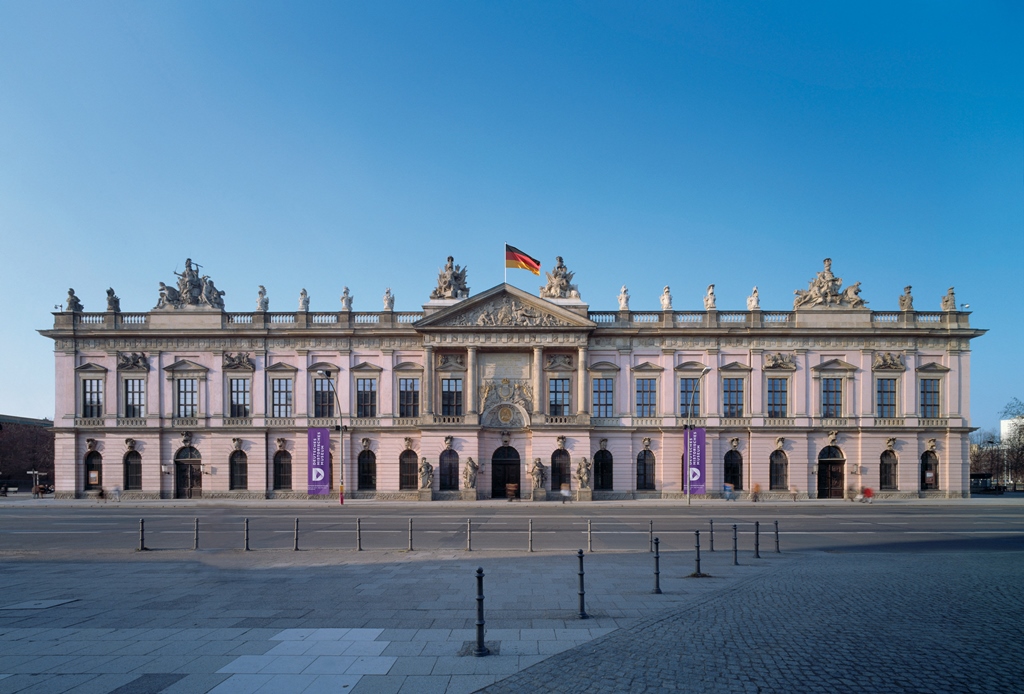
The Deutsches Historisches Museum unites history and modernity in its architecture, with the Baroque Zeughaus (Armory) building juxtaposed with a sleek steel-and-glass structure by I. M. Pei (1917-2019). Each an architectural marvel in its own right, the two buildings achieve complementary symbiosis, with the older one housing the permanent collection while the newer hosts temporary exhibitions.
Architectural guide highlights include:
- An audio tour of the former Berlin Armory, one of the most important buildings from the German Baroque period, highlighting the allegorical sculptures beside the entrance, Roman deities on the pediments, and 76 helmet-shaped keystones on the facade
- A detailed history of the Zeughaus (Armory) and the four architects involved in its construction, its role in wartime propaganda and Allied occupation, and its shifting focus as a museum before and after the fall of the Berlin Wall
Zeitz MOCAA
Cape Town, South Africa
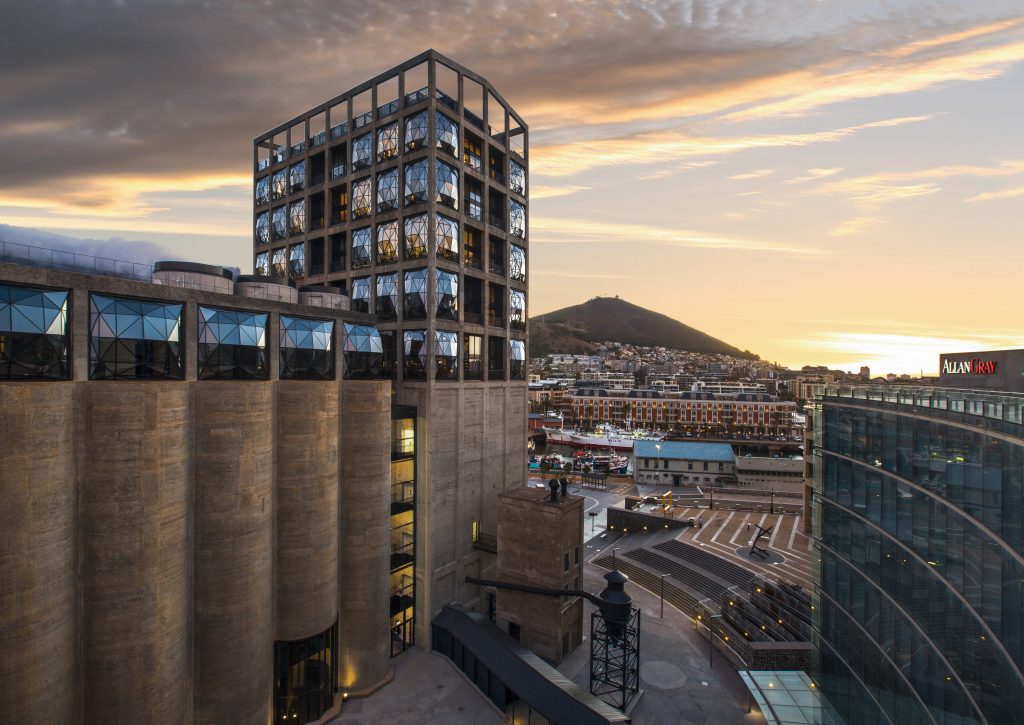
Located on Cape Town’s V&A Waterfront, Zeitz MOCAA is housed within a transformed grain silo, redesigned by Thomas Heatherwick (b. 1970). What was once 42 separate concrete tubes has been carved into a cathedral-like interior space, surmounted by a lattice arch of curved concrete, that offers one of the most unique art-viewing experiences in the world.
Architectural guide highlights include:
- A history of the original grain silo, built in the 1920s to facilitate grain exports by sea and eventually decommissioned in 2001
- The building’s multilayered significance as a colonial landmark, pioneering example of architectural brutalism, symbol of urban regeneration, and now African art epicenter
- An audio tour of the site’s architectural transformation, including an atrium modeled on a corn kernel, original grain chutes, spinal spiral staircase, and 6th-floor harbor views
When visiting one of these highlighted institutions around the world or your local museum, it’s worth paying attention to the architecture as well as the art it contains. All built spaces, even those in your own home, have the capacity to shape your experience, and becoming attuned to these effects can further enrich your enjoyment of them.