CaixaForum Madrid: From power plant to cultural center
March 19, 2026
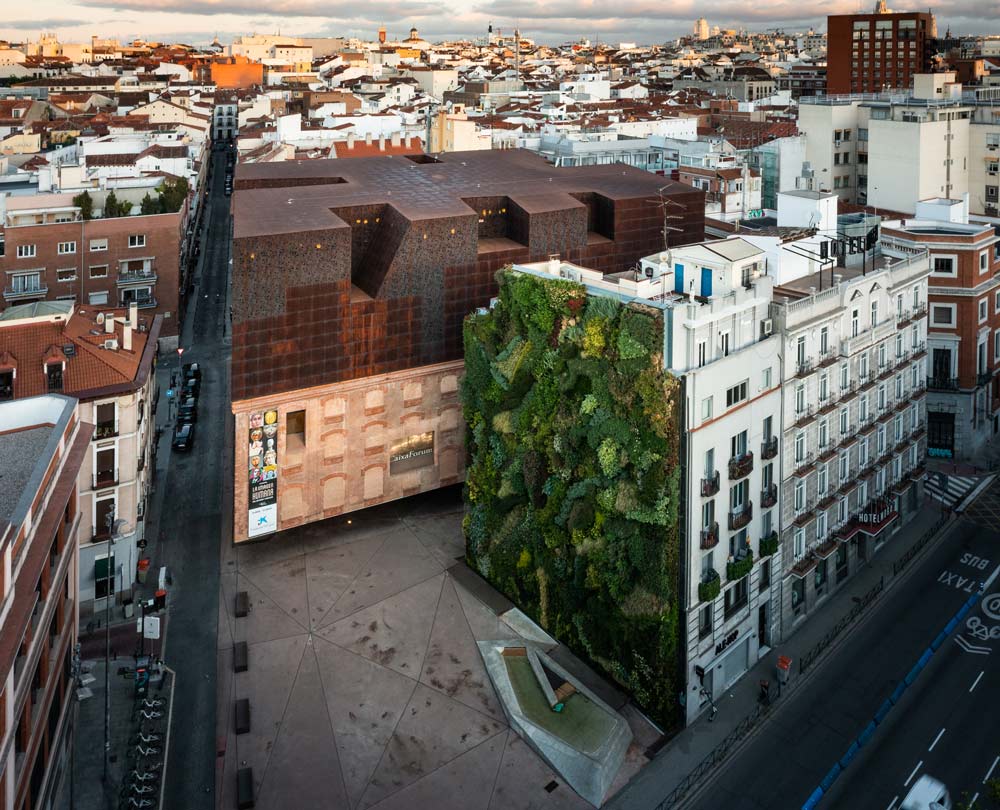
Inaugurated in 2008, CaixaForum Madrid is part of a national network of 11 cultural and exhibition centers in Spain that provide open, inclusive spaces for communities and the arts. These form part of the “la Caixa” Foundation, which invests in cities across the country by restoring architecturally significant buildings and transforming them into social spaces for cultural and scientific outreach.
CaixaForum Madrid does not have a permanent collection, focusing instead on touring exhibitions, concerts, workshops, and the building itself. The center’s striking architecture, including its floating structure and vertical garden, draws widespread interest from both tourists and locals. Formerly the Central Eléctrica del Mediodía, the site once powered the nearby Atocha rail hub. The power plant’s industrial past remains visible in renowned architects Herzog & de Meuron’s renovations, and the building’s layered history plays a central role in how visitors experience the site today.
Through Bloomberg Connects, CaixaForum highlights their buildings in Madrid and other cities, as a way of connecting place, history, and local audiences. The Madrid guide offers an audio-led experience focused on the building’s history, design, and transformation, complemented by specialist insights and archival images.
What unique content does the CaixaForum Madrid guide offer? You can:
- Learn how botanist and landscape architect Patrick Blanc designed the distinctive vertical garden on the building’s dividing wall
- Discover the biggest challenge in Herzog & de Meuron’s architectural renovation
- See how the machine rooms were transformed into exhibition halls
- Explore the cavelike basement and the spinal staircase
- Uncover the engineering “magic” trick behind the floating facade
Which other Spanish cities have CaixaForum guides on Bloomberg Connects?
- In Barcelona, explore the contemporary revitalization of the colossal Casaramona textile factory, an outstanding example of modern, industrial Catalan architecture
- In Palma, the country’s first Grand Hotel, with its eclectic ornamentation, foretold the island’s booming tourism industry and cultural achievements
- In Seville, discover the avant-garde aluminum exterior designed by local architect Guillermo Vázquez Consuegra in 2017
- In València, the focus is on innovative sustainability solutions, with a space inspired by living organisms and constructed from energy-efficient materials
- In Zaragoza, the tree-like concrete and steel is conceptualised as the center of cultural curiosity and community building in the city
You can explore the unique buildings, historical contexts, and cultural offerings of these CaixaForum centers on Bloomberg Connects, with more locations coming soon. The guide for each site interprets its historically significant building through audio, imagery, wayfinding, and multilingual content to help enrich your visit.